
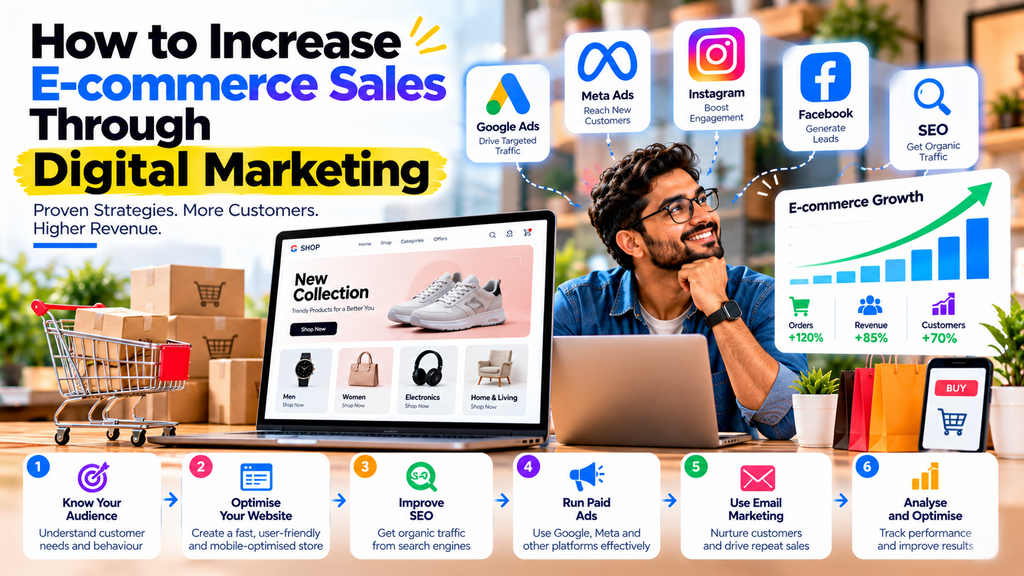
Increasing e-commerce sales requires more than listing products online. Businesses need a strategic digital marketing approach that attracts the right audience, builds customer trust, and converts website visitors into paying customers. From search engine optimisation (SEO) and paid advertising to email marketing and conversion rate optimisation, every channel plays an important role in online store growth.
Whether you run a new online store or an established e-commerce business, the right digital marketing strategy can help you attract qualified traffic, reduce abandoned carts, and increase revenue.
1. Optimise Your E-commerce Website for Conversions
Your website is the foundation of your online business. A slow, confusing, or poorly designed store can discourage potential customers from completing purchases.
To increase e-commerce sales, ensure your website loads quickly, works smoothly on mobile devices, and offers simple navigation. Use high-quality product images, clear descriptions, transparent pricing, and prominent calls to action.
Make the checkout process straightforward by minimising unnecessary form fields and displaying shipping costs, payment options, and return policies clearly. A seamless shopping experience reduces friction and helps customers purchase with confidence.
2. Use SEO to Attract Organic Traffic
Search engine optimisation helps your products appear when potential customers search for relevant items on Google. Unlike paid advertising, organic search can generate ongoing traffic without paying for every click.
Start with keyword research to identify relevant product and category search terms. Optimise product titles, descriptions, page headings, URLs, and image alt text naturally.
Create useful category pages and buying guides that answer customer questions. Implement appropriate internal linking, XML sitemaps, and structured data where relevant.
Technical SEO also matters. Monitor website indexing, page speed, mobile usability, and duplicate content. Consistent optimisation can improve search visibility and attract shoppers with strong purchase intent.
3. Run Targeted Google Ads Campaigns
Google Ads can help e-commerce businesses reach customers actively searching for products. Search campaigns, Shopping ads, and eligible Performance Max campaigns can support different stages of the buying journey.
Begin by identifying profitable products, setting clear conversion goals, and implementing accurate purchase tracking. Use relevant keywords, compelling product information, and suitable landing pages.
Monitor metrics such as cost per acquisition (CPA), conversion rate, average order value, and return on ad spend (ROAS). Avoid increasing your advertising budget solely because traffic is growing. Focus on campaigns that generate profitable sales after accounting for product costs and other expenses.
4. Leverage Social Media Marketing
Social media platforms allow e-commerce brands to showcase products, connect with customers, and build brand awareness. Instagram, Facebook, YouTube, and other relevant channels can help customers discover products and learn how they work.
Publish product demonstrations, tutorials, customer reviews, behind-the-scenes content, and short videos. Use high-quality visuals and clear calls to action to encourage users to explore your store.
Paid social campaigns can extend your reach to relevant audiences. Test different creative formats and offers, then evaluate purchases and revenue rather than relying only on likes and engagement.
5. Recover Abandoned Shopping Carts
Shopping cart abandonment is a common challenge for online retailers. Customers may leave before purchasing because of unexpected shipping costs, complicated checkout steps, payment issues, or simply a need for more time.
Use analytics to identify where customers abandon the purchase process. Consider sending timely cart recovery emails or consent-based reminders through appropriate messaging channels.
You can also improve checkout transparency, offer multiple trusted payment methods, and provide clear delivery and return information. Test incentives carefully, as frequent discounts may reduce profit margins or train customers to wait for offers.
6. Use Email Marketing to Increase Repeat Purchases
Email marketing helps e-commerce businesses maintain customer relationships and encourage repeat purchases. Build an email list through legitimate sign-up forms and communicate according to customer preferences and applicable privacy requirements.
Create automated welcome emails, order confirmations, product recommendations, and replenishment reminders where appropriate. Segment campaigns based on purchase history, interests, and engagement.
Personalised messages can make recommendations more relevant, while useful content keeps customers connected to your brand. Track email clicks, attributed purchases, unsubscribe rates, and revenue to improve campaign effectiveness.
7. Track Performance and Improve Results
Successful e-commerce marketing depends on measurement and continuous improvement. Use Google Analytics 4, advertising platform reporting, and your store’s analytics to understand how customers discover products and complete purchases.
Monitor key metrics, including conversion rate, average order value, customer acquisition cost, repeat purchase rate, and return on advertising spend.
Test product page layouts, headlines, images, checkout steps, and promotional offers. Make changes based on reliable data rather than assumptions, and measure whether each improvement contributes to better business results.
Conclusion
To increase e-commerce sales through digital marketing, focus on attracting qualified traffic, improving the shopping experience, running measurable advertising campaigns, and building lasting customer relationships. SEO, Google Ads, social media, email marketing, and conversion rate optimisation work best when they support a shared business strategy.
At ThiranNova, we help businesses strengthen their online presence through SEO, performance marketing, website optimisation, and marketing automation. With the right strategy and continuous performance analysis, your e-commerce store can build customer trust and pursue sustainable revenue growth.
Ready to grow your online store? Start by identifying your biggest sales bottleneck and prioritising the digital marketing improvement most likely to address it.
Really enjoyed reading this article! You’ve explained how digital marketing can help e-commerce businesses grow in a simple and practical way. I especially liked the points on SEO, abandoned cart recovery, and improving conversions. Great insights for anyone looking to increase their online sales!
For anyone who is looking
Best Digital Marketing Freelancer in Bangalore , can b useful resource. Thanks for sharing this valuable incites.