


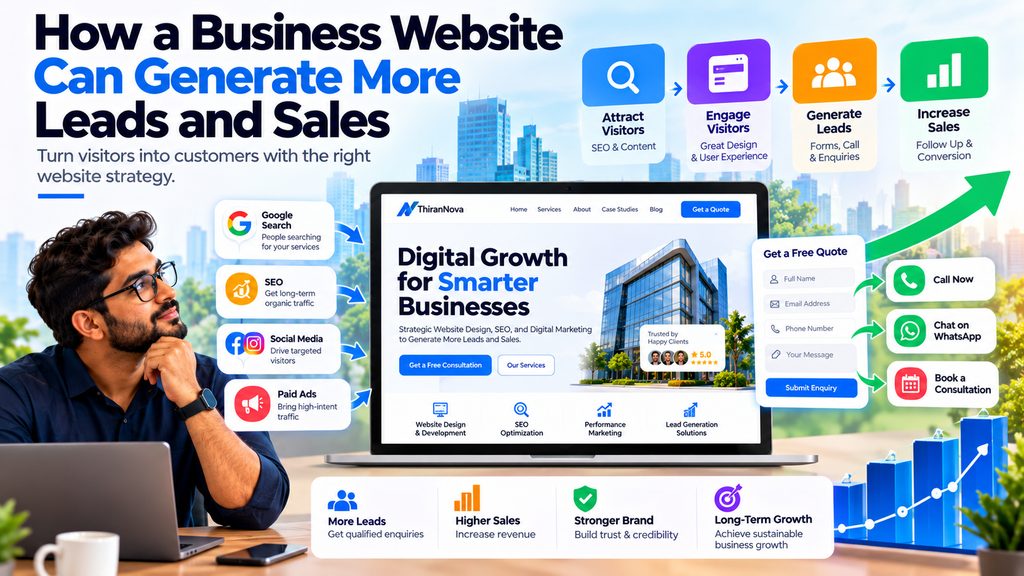
How a Business Website Can Generate More Leads and Sales
A business website is more than an online presence. When designed strategically, it can become a powerful tool for attracting potential customers, generating qualified leads, and increasing sales. However, simply launching a website does not guarantee business growth. You need the right combination of search engine optimization (SEO), user experience, persuasive content, and conversion rate optimization.
For businesses competing online, a well-optimized website helps build credibility, reach the right audience, and guide visitors toward taking action. In this article, we explore how a business website can generate more leads and sales through proven digital marketing strategies.
1. Optimize Your Website for Search Engines
Search engine optimization helps potential customers discover your business when they search for relevant products or services. Without SEO, even a professionally designed website may struggle to attract organic traffic.
Start with keyword research to identify the search terms your target audience uses. Include relevant keywords naturally in page titles, headings, meta descriptions, service pages, and blog content.
Additionally, improve website speed, mobile usability, internal linking, and technical SEO. Create helpful content that answers customer questions and demonstrates your expertise.
A strong SEO strategy improves your opportunities to attract relevant visitors who are actively looking for solutions your business provides.
2. Create Landing Pages That Convert Visitors
A landing page should guide visitors toward one clear objective, such as requesting a quote, booking a consultation, or purchasing a product.
Avoid overwhelming visitors with too many competing messages. Instead, use a compelling headline, a clear value proposition, relevant benefits, and a prominent call to action.
For example, a digital marketing agency can create a dedicated landing page for SEO services rather than directing every visitor to its homepage. This approach allows the page content to match the visitor’s search intent and campaign message.
Furthermore, include relevant testimonials, case studies, and answers to common objections. These elements can help potential customers feel more confident about contacting your business.
3. Improve Website User Experience
Website user experience influences how easily visitors find information and complete important actions. A confusing layout, slow-loading pages, or difficult navigation can discourage potential customers.
To improve the experience, ensure your website is responsive across mobile phones, tablets, and desktops. Organize services into logical categories, use readable typography, and make contact information easy to find.
Additionally, optimize page loading speed and remove unnecessary steps from forms and checkout processes. Every additional obstacle can make it harder for visitors to complete their intended action.
A user-friendly website helps visitors understand your offerings and move smoothly from browsing to enquiring or purchasing.
4. Use Strong Calls to Action
A call to action (CTA) tells visitors what to do next. Without clear guidance, interested prospects may leave your website without contacting you.
Use specific, action-oriented CTA buttons such as “Get a Free Quote,” “Book a Consultation,” or “Request a Demo.” Position them strategically on service pages, landing pages, and relevant blog posts.
For businesses with longer sales cycles, offer useful next steps, such as downloading a guide or booking an introductory call.
However, make sure each CTA matches the visitor’s needs and the page’s purpose. A relevant, clearly presented action can make the customer journey easier.
5. Build Trust with Quality Content and Social Proof
Potential customers often compare several businesses before making a decision. Your website should communicate why your business deserves their consideration.
Publish informative blog articles, service explanations, frequently asked questions, and practical guides that address customer concerns. Use genuine testimonials, verified reviews, relevant certifications, and case studies where available.
For example, a service provider can explain its process, showcase completed projects, and share documented client results. These details help visitors evaluate the business before making contact.
Avoid unsupported claims or fabricated testimonials. Trust grows when your website provides accurate information and demonstrates real expertise.
6. Capture and Follow Up with Leads
Generating enquiries is only one part of the sales process. Businesses also need a reliable system for collecting, organizing, and following up with prospects.
Use simple enquiry forms that request only the information necessary to begin the conversation. Depending on your business, you can also provide click-to-call buttons, appointment booking, or WhatsApp contact options.
Connect forms to a customer relationship management (CRM) system or suitable marketing automation workflow. This helps your team track enquiries, assign follow-up tasks, and respond promptly.
With appropriate consent and privacy practices, email follow-ups can also nurture interested prospects who are not ready to buy immediately.
7. Measure Website Performance and Improve Conversions
Website optimization should be guided by data rather than assumptions. Tools such as Google Analytics and Google Search Console can help you understand traffic sources, search performance, and visitor behaviour.
Track meaningful metrics, including:
- Organic search traffic and relevant landing-page visits.
- Enquiry form submissions and phone calls.
- Landing-page conversion rates.
- Qualified leads and sales generated.
- Customer acquisition cost and revenue.
Use these insights to identify underperforming pages, test different headlines or CTAs, and improve the user journey. Even small, evidence-based changes can reveal opportunities to improve results.
Conclusion: Turn Your Website into a Lead-Generation Asset
A business website can generate more leads and sales when it combines SEO, conversion-focused design, useful content, clear calls to action, and effective lead follow-up. However, sustainable results require ongoing measurement and optimization.
Rather than treating your website as a static online brochure, make it an active part of your digital marketing strategy.
Ready to generate more leads through your website? Explore professional website design, SEO, and performance marketing services to build a stronger online presence and turn more relevant visitors into customers. Contact our team to discuss a website strategy aligned with your business goals.