


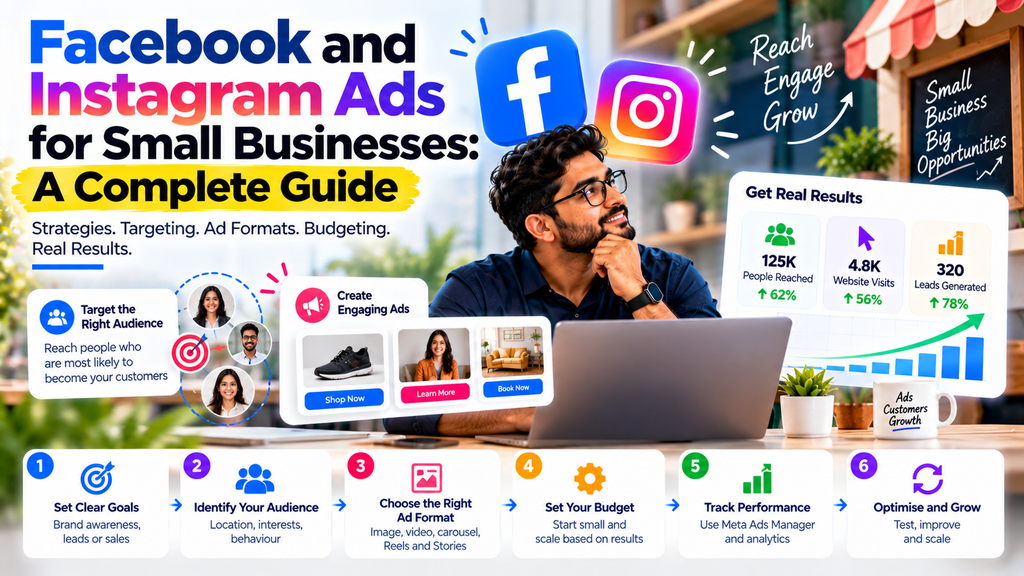
Facebook and Instagram Ads for Small Businesses: A Complete Guide
Facebook and Instagram ads are powerful digital marketing tools that help small businesses reach potential customers, generate leads, and increase sales. With targeted advertising, businesses can promote their products and services to specific audiences based on factors such as location, interests, demographics, and online behaviour.
However, successful advertising requires more than launching a campaign and spending money. Businesses need clear objectives, compelling creatives, effective targeting, and continuous performance optimisation. This guide explains how to use Facebook and Instagram ads for small businesses to achieve measurable marketing results.
1. Why Facebook and Instagram Ads Matter
Facebook and Instagram advertising is managed primarily through Meta Ads Manager, allowing businesses to create and manage campaigns across supported placements.
These platforms offer several advantages:
- Precise audience targeting: Reach people based on relevant audience signals and targeting options.
- Flexible budgets: Start with a manageable budget and adjust spending based on performance.
- Multiple ad formats: Use images, videos, carousels, Stories, and Reels.
- Lead generation: Collect enquiries through instant forms, messages, or landing pages.
- Measurable performance: Track impressions, clicks, conversions, and advertising costs.
For local businesses, service providers, and e-commerce brands, these capabilities can help attract relevant prospects and build brand awareness.
2. Define Your Advertising Goals
Before creating Facebook and Instagram ads, determine what you want your campaigns to achieve. Your objective influences how Meta delivers ads and which results you should measure.
Common campaign goals include:
- Increasing brand awareness and reach.
- Driving traffic to your website.
- Generating qualified leads.
- Encouraging WhatsApp or messaging enquiries.
- Increasing online purchases or bookings.
For example, a dental clinic may focus on appointment enquiries, while an online store may optimise campaigns for purchases. Choose an objective that reflects your actual business goal rather than focusing exclusively on likes or impressions.
3. Identify Your Target Audience
Audience targeting helps businesses reach people who are more likely to be interested in their offers. Start by defining your ideal customer, including their location, needs, interests, and purchasing behaviour.
A local fitness studio, for example, may target people in its service area, while a B2B company may focus on decision-makers in relevant industries.
You can also use eligible first-party customer data and website engagement audiences, subject to Meta’s requirements and applicable privacy rules. Where sufficient data is available, test broader audiences against more specific targeting approaches.
Avoid narrowing your audience unnecessarily. Test different audience segments and evaluate lead quality, conversion rates, and acquisition costs before deciding which performs best.
4. Create High-Converting Ad Creatives
Your ad creative plays an important role in attracting attention and communicating value. Use high-quality images, short videos, clear headlines, and persuasive calls to action.
Effective ads should explain three things: what you offer, why it matters, and what the customer should do next.
For example, a local service business could use a short video demonstrating its service, highlighting a genuine customer benefit, and inviting viewers to request a quotation.
Test different creative concepts, opening hooks, headlines, and formats. Ensure your landing page matches the promise made in the advertisement. Avoid exaggerated claims and use authentic testimonials only when you have permission to publish them.
5. Set a Realistic Advertising Budget
Small businesses can begin with a controlled testing budget that they can afford to spend without expecting immediate returns. There is no universal budget that guarantees successful results.
Allocate spending according to your campaign objective, audience size, competition, and expected conversion value. Allow enough time and budget to collect useful performance data before making major decisions.
Monitor cost per lead (CPL), cost per acquisition (CPA), conversion rate, and return on ad spend (ROAS), where relevant. Remember that low-cost leads are not necessarily valuable leads; assess whether enquiries turn into customers and revenue.
6. Track and Optimise Campaign Performance
Tracking enables businesses to understand which advertisements generate meaningful results. Use Meta Ads Manager reporting and appropriate website analytics to review campaign performance.
For website conversions, consider implementing the Meta Pixel and, where suitable, the Conversions API. Configure events correctly, respect consent requirements, and verify that conversions are recorded accurately.
Review performance regularly and test one meaningful change at a time where practical. Pause consistently underperforming ads, improve weak landing pages, and allocate more budget to campaigns that demonstrate sustainable results.
7. Retarget Interested Customers
Many people need multiple interactions with a business before making a purchase. Retargeting allows advertisers to reconnect with eligible audiences who have previously engaged with their content, website, or products.
For example, an online store may show relevant product advertisements to previous website visitors, while a service provider may promote a consultation to people who engaged with its business content.
Use appropriate audience exclusions, frequency monitoring, and privacy-compliant data practices to avoid overwhelming potential customers.
Conclusion
Facebook and Instagram ads for small businesses can support brand awareness, lead generation, and sales when campaigns are built around clear objectives and reliable measurement. By understanding your audience, creating compelling ads, setting a realistic budget, and optimising performance, you can make more informed advertising decisions.
At ThiranNova, we help businesses strengthen their digital presence through performance marketing, SEO, website optimisation, and marketing automation. A structured advertising strategy can help turn your marketing budget into measurable business opportunities.
Ready to improve your advertising results? Start with one clear objective, test your campaigns systematically, and use performance data to guide your next steps.
Great article! I particularly agree that successful Facebook and Instagram advertising requires more than just spending money. Having the right audience targeting, compelling creatives, realistic budgeting, and continuous optimisation is essential for generating quality leads and sales.
For anyone looking to build practical digital marketing skills,
Best Digital Marketing Course In Bangalore can be a useful resource.
Thank you for sharing these valuable insights!
Great article! This is a very informative guide for small businesses looking to improve their online presence through Facebook and Instagram advertising. I particularly liked the sections on audience targeting, ad creatives, and campaign optimisation.
I also work in digital marketing, specialising in SEO, performance marketing, and website development. It would be great to explore a relevant backlink collaboration between our websites.
Sachin S –
Digital Marketing Freelancer in Bangalore
Thank you for sharing these valuable insights!